← All articles
The Best Way to See Vigeland Park
Timing, tips and how to make it part of a full Oslo day
Timing, tips and how to make it part of a full Oslo day
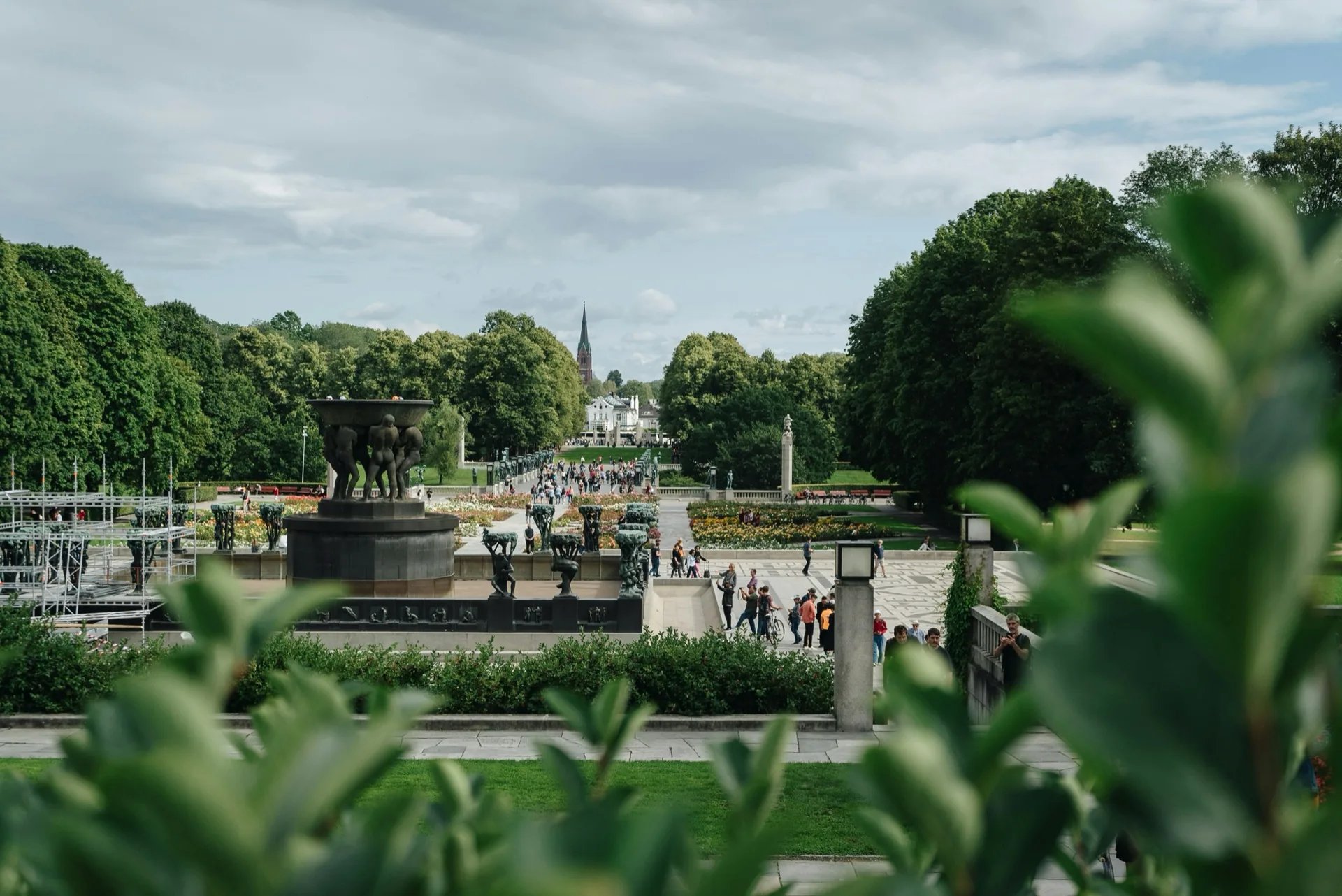
Vigeland Park is Oslo's most-visited attraction, and for good reason — it's the largest sculpture park in the world created by a single artist, with more than 200 bronze and granite figures laid out across 80 acres of open parkland. The sculptures are free to see, the park never closes, and most visitors give it an hour or two.
The more useful question isn't what Vigeland Park is — it's how to see it well, and how to fit it into a day in Oslo without it becoming an isolated errand on the far side of the city. Here's the local take.
The park is free to enter and open 24 hours a day, year-round — there are no tickets and no reservations. Gustav Vigeland designed not just the sculptures but the entire layout, so the park reads as one continuous work, building from the entrance gates along a central axis to the famous Monolith and the Wheel of Life. Set aside at least an hour; closer to two if you want to photograph properly or wander the wider Frogner Park around it.
One thing worth knowing: the Vigeland Park (the sculptures, outdoors, free) and the Vigeland Museum (Gustav Vigeland's studio and original plaster casts, indoors, paid, closed Mondays) are two different things. Most visitors only mean the park.
Timing changes the park completely. Early morning is the local secret — soft light, near-empty paths, and the bronze figures at their most photogenic before the tour groups arrive. Late summer evenings are the other sweet spot, when Oslo's long northern daylight lingers and the granite glows.
Midday in July is the park at its busiest, particularly around the Monolith. Off-season has its own appeal: the sculptures are striking under autumn leaves or a dusting of winter snow, and you'll often have the place to yourself. The park genuinely works in any season — the only thing to plan around is the crowd, not the weather.
Most visitors photograph the Angry Boy (Sinnataggen) on the bridge and move on. Take the time to walk the full central axis — Vigeland intended the park to be experienced as a journey through the cycle of human life, from the children near the entrance to the figures climbing the Monolith. The Wheel of Life at the far end is the piece that ties the whole idea together, and it's the one most rushed visitors miss. The viewpoint at the top of the Monolith plateau also gives you a quiet panorama back across the park and the surrounding city.
Vigeland Park sits in the Frogner district, about 4 km west of the city centre. By public transport, tram line 12 stops right at the park (Vigelandsparken), and bus 20 also stops nearby; on the metro, any westbound line to Majorstuen leaves you a five-to-ten-minute walk away. On foot from the centre it's roughly an hour.
But the park's location points to something most guides skip: Frogner is also where Oslo's most pleasant cycling is. The park is a short, flat ride from the centre along quiet residential streets and cycle paths, and arriving by bike means you're not tied to a tram timetable — you can roll straight in, linger as long as you like, and continue on to whatever's next.
Here's the thing about Vigeland Park — visited on its own, it's a there-and-back trip to the western edge of the city. Visited as part of a route, it slots naturally between the waterfront, the Royal Palace and the elegant streets of Frogner, and the whole thing becomes one continuous experience rather than a checklist of separate stops.
That's exactly how our Oslo City Highlights tour is built. Vigeland Park is one of the stops on a relaxed loop that also takes in the Opera House, Aker Brygge, the fjord waterfront and the Royal Palace gardens — flat, easy riding suitable for any fitness level, with your guide handling the route and the timing. We start with pickup directly at your hotel, so there's no meeting point to find and no working out tram connections. You see the park properly, in context, and you see the best of the city around it in the same morning.
Our City Highlights tour covers Vigeland Park, the Opera House, Aker Brygge and the Royal Palace in one relaxed ride — hotel pickup included.
Oslo City Highlights tourYes. The sculpture park is completely free and open 24 hours a day, year-round. Only the separate, indoor Vigeland Museum charges admission.
Most visitors spend one to two hours. Allow closer to two if you want to walk the full central axis to the Monolith and Wheel of Life or photograph the sculptures without rushing.
Early morning and late summer evenings are best — softer light, fewer people, and the sculptures at their most photogenic. Midday in summer is the busiest, especially around the Monolith.
Tram 12 stops at the park, bus 20 stops nearby, and any westbound metro to Majorstuen leaves a short walk. It's about 4 km from the centre — also a short, flat bike ride or a roughly one-hour walk.
Yes — it's Oslo's most popular attraction and the world's largest sculpture park by a single artist. It's most rewarding when seen as part of a wider route through the city rather than as an isolated trip.