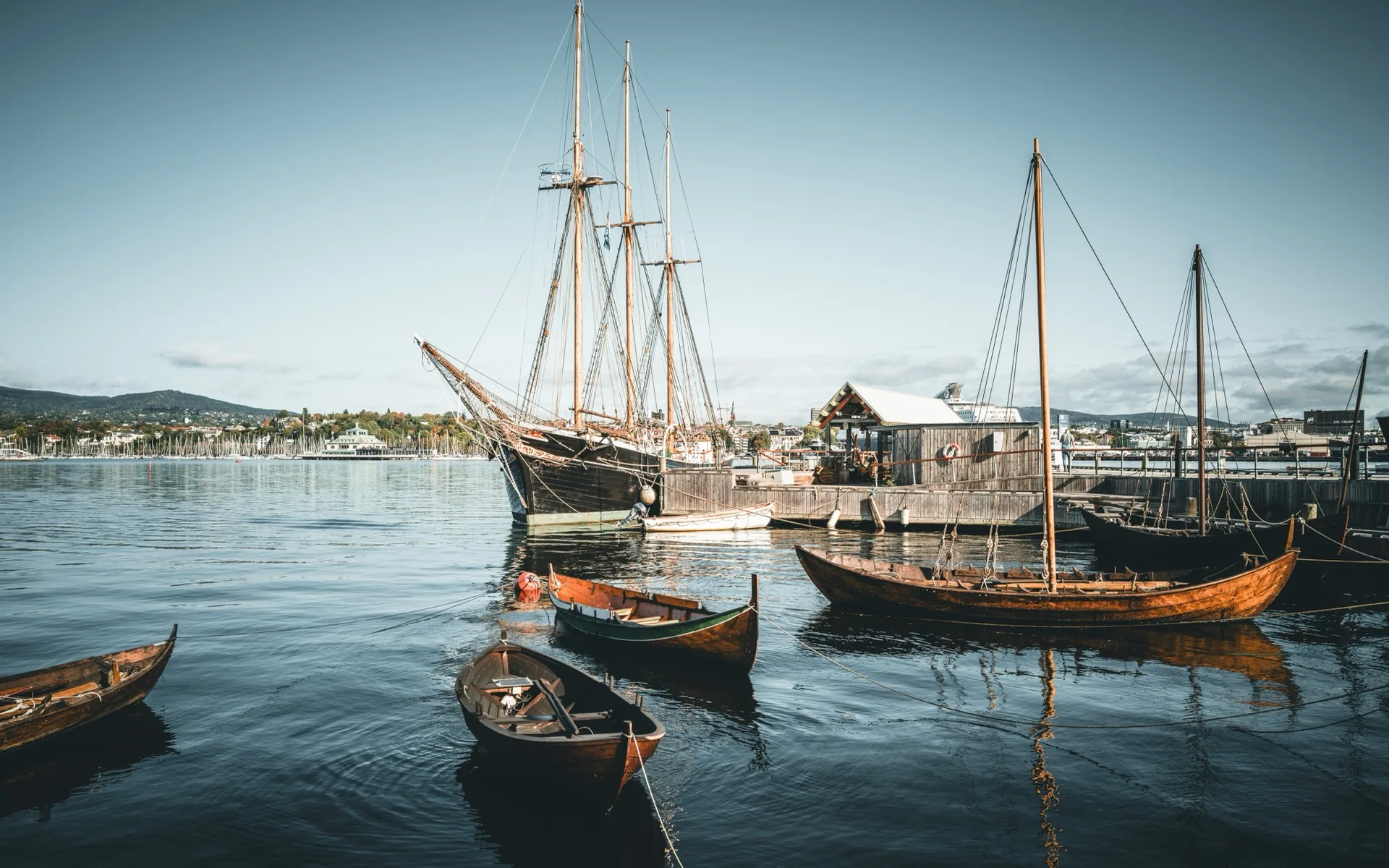
Just west of central Oslo, the Bygdøy peninsula is where the city goes to slow down. It's a green, forested headland reaching into the Oslofjord — home to several of Norway's most important museums, a scatter of swimming beaches, the Royal Family's summer estate, and some of the most peaceful fjord views within easy reach of the centre. For a place this close to downtown, it feels remarkably like an escape.
Most guides treat Bygdøy as a list of museums to tick off. That's part of it, but the peninsula itself — the tree-lined lanes, the open water, the quiet — is just as much the point. Here's how to see it well.
The museums. Bygdøy is Oslo's museum quarter, and the cluster is unusually rich. The Fram Museum holds the polar exploration ship Fram, the most famous vessel in Norwegian expedition history; the Kon-Tiki Museum tells the story of Thor Heyerdahl's raft voyages across the Pacific; the Norwegian Maritime Museum covers the country's deep relationship with the sea; and the Norwegian Museum of Cultural History (Norsk Folkemuseum) is a sprawling open-air museum of historic buildings, including a 13th-century stave church. They sit close together near the tip of the peninsula, so it's easy to combine two or three in a visit. (Bygdøy is also home to the Viking Ship Museum, closed for rebuilding and due to reopen as the Museum of the Viking Age in November 2027. Check its status before you plan a visit around it.)
The beaches and the coast. Huk and Paradisbukta are Bygdøy's swimming beaches, busy with locals on warm summer days and quietly beautiful the rest of the year. Even if you're not swimming, the southern shoreline gives you open fjord views stretching toward Nesodden.
The greenery and the royal grounds. The peninsula's lanes are lined with chestnut trees and edged by the grounds of the Royal Farm and the little palace of Oscarshall. It's flat-to-gently-rolling, calm, and a world away from the city it's attached to.
Bygdøy is at its best from late spring through early autumn, when the trees are full, the beaches are open, and the seasonal ferry is running. Summer weekends bring locals out to swim and picnic, which adds life to the place; weekday mornings are quieter if you want the museums and lanes more to yourself. The peninsula stays lovely in autumn too, though the ferry stops for the season and the beaches empty out. It's worth knowing the museums each keep their own opening hours — check ahead if a specific one is your reason for going.
There are four ways across, and the one you choose shapes the whole visit.
By ferry. In the warmer months — roughly late March to early October — the Bygdøy ferry runs from Rådhusbrygge 3 by the City Hall, taking about 10–15 minutes across the water to the museum piers. It's the most scenic arrival, and a small pleasure in its own right. It's seasonal, though, so check current schedules before relying on it.
By bus. Bus 30 runs year-round from the city centre to Bygdøy, stopping near the museums, and takes around 15 minutes. It's the reliable all-weather option, especially outside ferry season.
By bike. This is the locals' way, and arguably the best. From the centre you follow the harbour promenade west along Frognerkilen bay and onto the peninsula — roughly 20 minutes of mostly flat, waterfront riding. You arrive under your own steam, you're not tied to a ferry timetable or a bus stop, and the ride along the water is genuinely part of the experience rather than just transport.
By car. Possible, with paid parking near the museums, but the least rewarding way to experience a peninsula whose whole charm is its calm.
The catch with Bygdøy is that its appeal is spread out. The museums are clustered, but the beaches, the royal grounds, the viewpoints and the quiet lanes are scattered across the headland — and on foot, getting between them eats up a surprising amount of the day. A ferry drops you at the museums and leaves the rest of the peninsula out of reach; a bus does much the same.
By bike, the whole peninsula opens up. You can roll from the waterfront to the museum piers, out along the southern shore for the fjord views, past the royal grounds and down to a beach, all without rushing — and the flat, quiet roads make it easy riding for any level.
That's exactly the idea behind our Bygdøy Peninsula tour. We follow the waterfront cycle path out from the centre, loop the peninsula's quiet tree-lined roads past the museum cluster and along the shore with its open fjord panoramas, and let your guide bring the history alive as you ride — all at a relaxed pace, with just one gentle climb onto the peninsula. We start with pickup directly at your hotel. If you want to go inside a museum on your own time afterwards, you'll know exactly where everything is.
Our Bygdøy Peninsula tour covers the waterfront ride, the shore, the royal grounds and the museum area — hotel pickup included.
Bygdøy Peninsula tourFour ways: the seasonal ferry from Rådhusbrygge 3 by the City Hall (about 10–15 minutes), bus 30 year-round (about 15 minutes), a flat 20-minute bike ride along the waterfront, or by car with paid parking near the museums.
No. The ferry is seasonal, running roughly from late March to early October. Outside those months, bus 30 is the reliable way across. Always check current schedules before you go.
The Fram, Kon-Tiki, Maritime and Norwegian Museum of Cultural History museums, the Huk and Paradisbukta beaches, the Royal Farm grounds and Oscarshall palace, and open fjord views along the southern shore.
A half-day covers the highlights at a relaxed pace. Allow a full day if you plan to go inside two or three museums as well as enjoy the beaches and the peninsula itself.
Yes. It's about a 20-minute ride from the city centre along the harbour promenade and Frognerkilen bay — mostly flat, scenic, and one of the nicest ways to arrive.