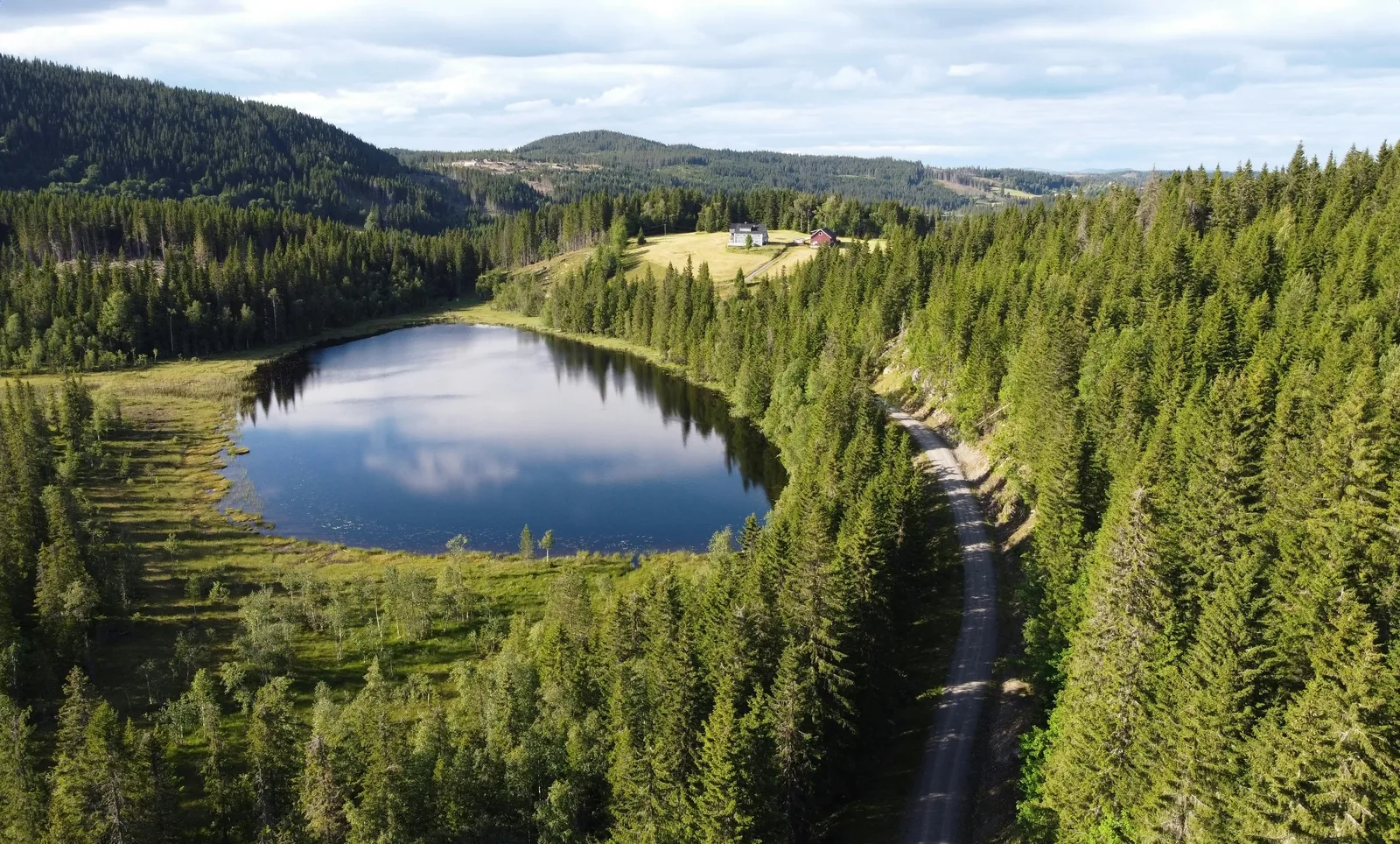
Ride north out of Oslo and keep going until you reach a different lake. Around 150 kilometres later you roll into Gjøvik on the shore of Mjøsa, Norway's largest lake, having crossed the Nordmarka, the forests and farmland of Hadeland, and the ridge of Totenåsen. Then you put the bike on a train and are back in Oslo in about two hours. No loop, no backtracking, no car.
This is a route local riders have been doing for years rather than one we invented, and it is well documented in Norwegian. CyclingRoutes and the Sykkel.org forums are good places to start for GPX files and variations. What follows is how it works as a trip from Oslo, and the logistics that decide whether it goes smoothly.
The first stretch is the part we know best: Nordmarka, ridden the long way. From the northern edge of the city you climb through the forest past Kikut, Sandungen and Gjerdingen, which most Oslo riders have visited on day trips but few have ridden straight through and out the other side. Somewhere north of Gjerdingen the forest stops being Oslo's back garden and starts being simply forest.
Then the land opens. Hadeland is a mix of deep spruce woods and broad farmed country, and the riding alternates between forest gravel and open agricultural roads with long views. The last act is Totenåsen, a ridge of forest and upland farms that you cross before the descent to Mjøsa and the town of Gjøvik.
The numbers, roughly: 150 km, about 2,000 metres of climbing, and around 80 percent unpaved. Nothing technical about it: this is forest and farm gravel, not trail. But it is a long way, and the climbing is spread through the whole thing rather than concentrated in one pass.
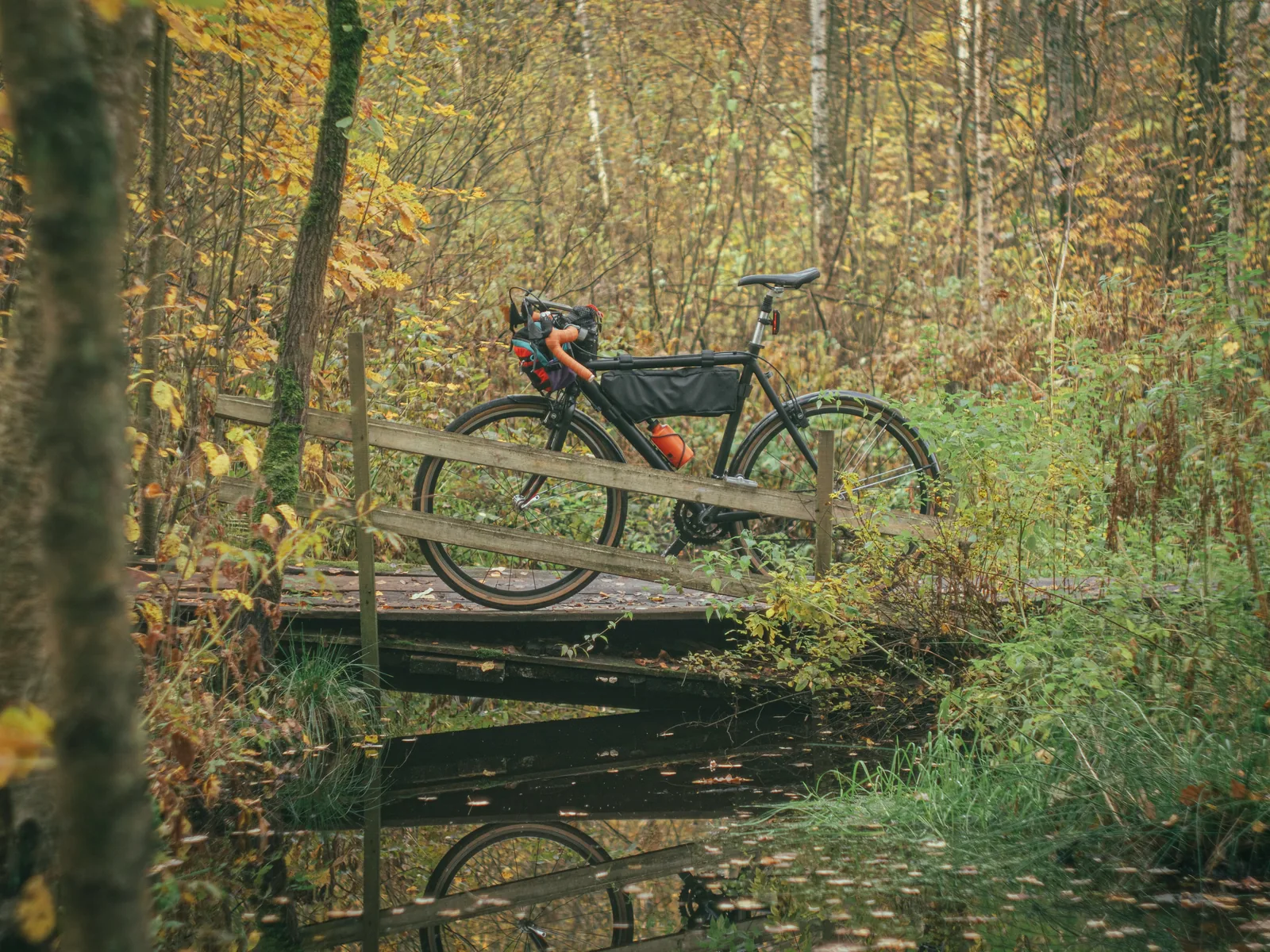
Fit riders do this in a single day, and some ride it both ways over a weekend. For most people it is a better trip split in two, with a night somewhere around Hadeland. That turns a time trial into an actual journey: you get the Nordmarka in the evening light on day one, and the open country and the drop to Mjøsa on day two.
Riders who have done it are blunt about one thing: it is hillier than 150 km sounds. Fast local riders report a little over seven hours of riding; plenty of others describe a full ten-hour day. The climbing is relentless rather than dramatic, and it is the accumulation that catches people out. The short, steep ramps by the Sister Churches at Granavollen have their own reputation for emptying legs, particularly in the wet.
Brandbu is the resupply point that matters. It sits near the middle of the route and is the last proper shopping before the long forest section, so stock up there rather than assuming something will turn up. Norwegian riders are emphatic about this one.
A minute or two from Brandbu at Røykenvik, on the shore of Randsfjorden, Lokstallen is an old locomotive shed turned restaurant that riders on the Norwegian forums rate well above anything else in the area, with outdoor seating by the water. It is worth timing your day around, with one catch: it opens at 12.00 and is closed on Mondays and Tuesdays.
Norway's right to roam applies along most of the route, so you can camp on uncultivated land at least 150 m from buildings. One local caveat: much of Hadeland and Toten is genuinely farmed, and cultivated land is not covered by the right to roam. Aim your evening at the forested sections rather than the fields.
You do not have to camp, and for a lot of visitors that matters: if you have flown into Oslo and rented a bike, you probably do not have a sleeping bag with you. This route can be ridden hotel to hotel, which turns a bikepacking trip into something closer to light touring with a credit card.
Around the halfway mark, Hadeland has the most character. Granavolden Hotel & Gjæstgiveri at Granavollen has been putting up travellers since 1657 and is part of Norway's historic hotels association, which is a rather good place to stop on a journey made largely of old roads. Gran also has Sanner Hotell and Hotell Hadeland if you want something more ordinary.
Further on, Sillongen Toten Hotel sits by a lake at Bøverbru on the Toten plateau, well placed if you would rather break the ride later and leave a short final morning into Gjøvik. And at the finish, Quality Hotel Strand is in the middle of Gjøvik a few minutes from the station, with a pool and a rooftop restaurant in summer, which is a reasonable way to end 150 km.
Nordmarka's cabins come too early in the ride to break the day usefully, but they are worth a coffee stop on the way out. One planning note: these are working hotels in small towns, not a chain of bike hostels, so book ahead in summer and confirm they are on the variant of the route you are actually riding.
Gjøvik has a station at the end of the Gjøvik line, and the journey back to Oslo takes about two hours. That is the whole appeal of riding this direction: the return is a seat, a window and a lake.
But the bike needs its own ticket, and this is where people come unstuck. A bike reservation is mandatory on the Gjøvik line. On many Norwegian local trains bike space is first come, first served; the Gjøvik line is specifically one of the routes where Vy requires you to reserve. Book the bike at the same time as your own ticket, at vy.no or in the Vy app, under Travellers. Staff still have the final word on whether there is room on the day, so this is not something to leave to chance after 150 km in your legs.
One thing riders do mention: carry a light even in summer. Being caught out in Nordmarka after dark is slow and disorientating, and the forest is the section you least want to be guessing at.
The reassuring part is that the Gjøvik line runs close to the route for much of its length. If you run out of legs, break something or simply misjudge the day, a station is rarely far away.
We have written this as Oslo to Gjøvik because starting at home is simpler: you collect the bike, ride out of the city, and there is no timetable hanging over the first day.
Plenty of local riders do the opposite, though: the morning train up to Gjøvik, then ride home. Their reasoning is worth knowing. Doing it that way, you use your booked bike space at the start of the day, when you are certain to be at the station on time. Riding out means your reservation sits at the far end of a long day, and a mechanical or a slow morning turns into a missed train. Neither direction is harder to ride. Pick based on how much you like deadlines.
A gravel bike with 38 mm or wider tyres is right for this. The surfaces are not demanding, but 150 km of gravel rewards comfort over speed, and a little extra tyre makes the second half considerably more pleasant.
We rent gravel bikes and e-bikes with pickup at Kjelsås, Sognsvann or Oslo Central Station, and there is no maximum rental length. For this route Kjelsås is the natural start: it sits at the Nordmarka end of the city, so you are into the forest within minutes instead of riding across town first. The tram out to Kjelsås takes about 25 minutes.
The Bikepacking Luggage Set (bar, frame and seatpost bags) is enough for an overnight trip like this. On a two-day rental it is NOK 400; on rentals of five to six days it drops to half price, and from seven days it is included. The bike is returned in Oslo, so it travels home with you on the train and your rental needs to cover that day too.
One more thing, since this route is long and much of it is a long way from a bike shop: carry more than one inner tube. We include a spare tube and a tool kit on longer rentals, but a single tube is not a plan on 150 km of gravel.
Gravel bikes and e-bikes with pickup at Kjelsås on the edge of the Nordmarka, luggage bags available, and no maximum rental length.
Bike rental in OsloAround 150 km on the gravel route through Nordmarka, Hadeland and Totenåsen, with roughly 2,000 m of climbing and about 80 percent of it unpaved. It rides harder than the distance suggests: fast local riders report a little over seven hours in the saddle, while many describe a full ten-hour day. Strong riders treat it as one long day; most people enjoy it more split over two.
Yes, but a bike reservation is mandatory on the Gjøvik line — it is one of the specific routes where Vy requires it, rather than being optional as on many local trains. Book the bike space together with your ticket at vy.no or in the Vy app. Staff have the final say on whether there is room, so do not rely on turning up and hoping.
Both work and the route is the same. Riding out from Oslo means no train logistics at the start and the journey ends at Lake Mjøsa. Many local riders prefer the reverse — train up to Gjøvik in the morning, then ride home — because the booked bike space is used at the start of the day rather than depending on you reaching the station on time.
A gravel bike with 38 mm or wider tyres. The route is mostly forest and farm gravel rather than technical trail, but it is long, and comfort matters more than speed over 150 km. An electric bike with gravel capability is a reasonable choice if the climbing is the limiting factor, though you will need to plan charging on an overnight trip.
You can camp under Norway's right to roam on uncultivated land at least 150 m from buildings, avoiding the farmed parts of Hadeland and Toten. You can also ride it without a tent: Granavolden Gjæstgiveri and Sanner Hotell around Hadeland make a natural halfway stop, Sillongen Toten Hotel sits later on the Toten plateau, and Quality Hotel Strand is at the finish in Gjøvik. Book ahead in summer.
Brandbu, near the middle of the route, is the last proper shopping before the long forest section, and Norwegian riders are emphatic about stocking up there. Just outside it at Røykenvik, the Lokstallen restaurant is the standout stop, though it opens at 12.00 and is closed Mondays and Tuesdays. Gran and Jaren also have shops. Plan on carrying food for the Nordmarka stretch, where there is nothing.
Yes. We rent gravel bikes and e-bikes with pickup at Kjelsås, Sognsvann or Oslo Central Station, and there is no maximum rental length. Kjelsås is the most convenient start for this route because it sits at the Nordmarka end of the city. The bike comes home with you on the train and is returned in Oslo, so book enough days to cover the return journey.