← All articles
Oslo Coffee Guide for Visitors
What to order, where to go, what to expect — and how much to pay
What to order, where to go, what to expect — and how much to pay
Oslo's coffee scene has a reputation that precedes it. The city produced the World Barista Champion in 2004, built over 80 specialty operations since, and developed a light-roast approach that influenced cafés from Melbourne to Brooklyn. For visitors arriving without context, the sheer density of good coffee can be disorienting. This guide cuts through it.
The short version: Oslo is not an espresso city. The dominant tradition here is filter coffee — brewed slowly, served black, light-roasted to preserve the character of the origin rather than develop a roast flavour. The result is clean, often fruity or floral, and quite different from what you'd find in Italy, France or most of central Europe.
This is not a recent affectation. Norwegians have been heavy coffee drinkers for generations — the country sits second in the world for per-capita consumption. What changed in the early 2000s was the application of technical rigour to that existing habit. Tim Wendelboe's World Barista Championship win in 2004 was the signal moment. The philosophy it represented — origin-focused, light-roasted, precisely prepared — has defined Oslo specialty coffee ever since.
Espresso in Oslo is also very good, but it is lighter and more fruit-forward than the thick, dark pulls common further south. If you arrive expecting Italian espresso and order the same thing here, you may be surprised. That is not a problem — adjust your expectations slightly and you will enjoy it more.
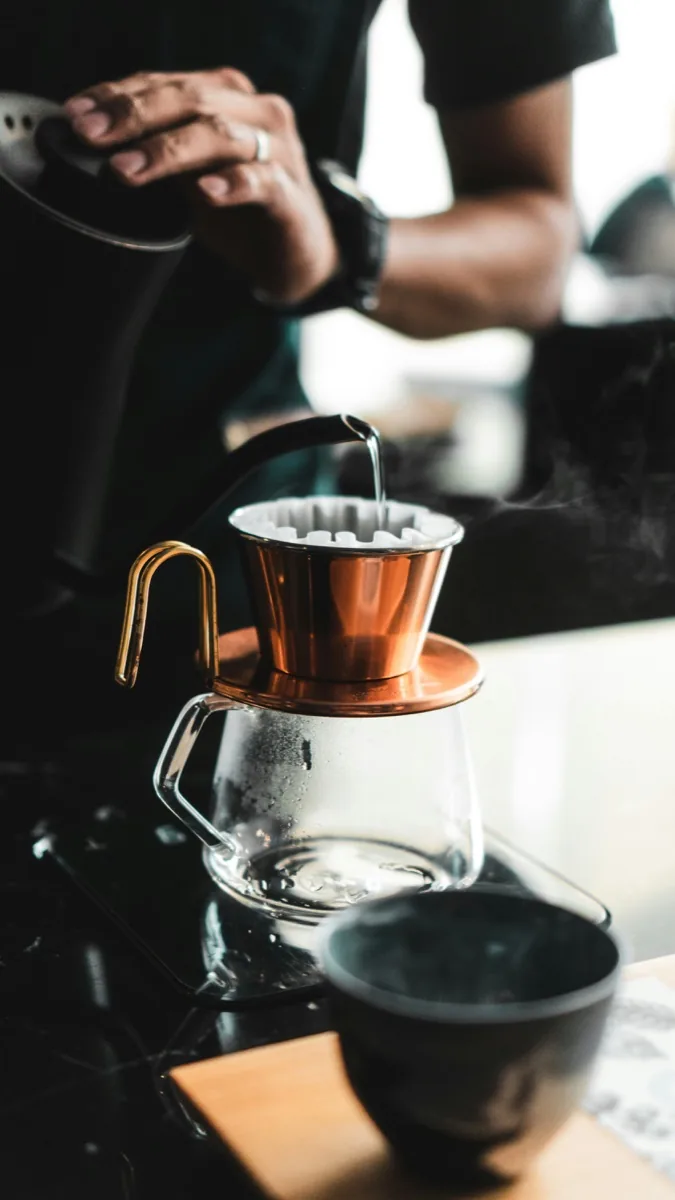
Start with filter coffee. Ask for 'today's single origin' or simply 'filter coffee' — every specialty café will have one on, usually a batch brew or a manual brew method like V60 or Chemex. Try it black first. The flavour is the point; adding milk works, but it changes the experience significantly.
If you prefer espresso-based drinks, a classic espresso or a cortado (espresso with a small amount of warm milk) shows the coffee best. A flat white or cappuccino is excellent in Oslo and will taste different from what you're used to — brighter, less bitter, more nuanced. A large latte is available everywhere but it is not the showcase.
One thing to avoid: asking for a "dark roast" or "strong coffee" at a specialty café. In this context, dark means over-roasted, which is not a compliment. If you want intensity, order a ristretto — concentrated espresso — or ask the barista what they'd recommend for something with more body.
Four shops stand clearly above the rest for visitors who want the full picture:
These four sit within a 10-kilometre loop and connect naturally by bike. If you have a morning free and want to understand Oslo coffee properly, they are the route. For more on each shop and the ride between them, see our guide to best specialty coffee in Oslo by bike.
Oslo is expensive by European standards. Expect to pay:
These prices are consistent across the main specialty cafés. You will not find a significantly cheaper version of the same quality. What you are paying for is single-origin beans, properly maintained equipment and skilled preparation — the combination that makes Oslo worth the cost.
Tipping is not expected. Norwegian café wages are structured to not require it. Rounding up is appreciated if you feel the service warrants it, but it is not obligatory.
Seating. The best specialty cafés in Oslo are small. Tim Wendelboe has a handful of stools. Arrive early or be prepared to stand. Supreme Roastworks in Mathallen has more space. Fuglen and Java have reliable seating on most days.
Wi-Fi. Available in most cafés. Not always advertised — ask the counter. Oslo café culture is not hostile to laptops, but the best specialty bars are not designed as co-working spaces.
Payment. Card only at most Oslo cafés. Cash is rarely accepted and sometimes politely declined. Apple Pay and Google Pay work everywhere Visa does.
Language. English is universal. You will not struggle. Most baristas at specialty cafés speak excellent English and enjoy talking about coffee if you show interest.
Timing. Weekday mornings before 10am are quietest. Weekend mid-morning is busy at Tim Wendelboe especially. Supreme Roastworks and Fuglen handle weekend crowds better due to their size.
The best coffee neighbourhoods — Grünerløkka, Vulkan, Pilestredet and St. Hanshaugen — are also the most interesting parts of Oslo to spend a morning in. Grünerløkka has independent shops, markets and the Akerselva river. Vulkan has Mathallen and the old industrial waterfront. St. Hanshaugen has the park and some of the city's quietest residential streets.
A morning that starts at Tim Wendelboe and ends at Java, with stops at Supreme and Fuglen in between, covers more of Oslo's character than most half-day tourist itineraries. The coffee is the thread; the neighbourhoods are the substance.
The Oslo Coffee Tour does exactly this route as a private guided bike ride — with hotel pickup, a local guide, and the context that makes each stop more than just a café visit.
A filter coffee at a specialty café costs around NOK 45–60. An espresso is NOK 40–55. A flat white or cappuccino is NOK 65–80. Oslo is priced similarly to London or Zurich — expensive, but the quality at the top end justifies it.
Ask for filter coffee or today's single origin as your first cup. Try it black. It will likely be light-roasted, possibly fruity or floral — quite different from Italian-style espresso. If you prefer milk-based drinks, a flat white or cortado works well. Avoid ordering a large latte as your introduction; you'll miss what makes Oslo coffee distinctive.
Filter coffee is Oslo's default — brewed by pouring hot water over ground coffee, usually by V60, Chemex or batch brew. It produces a clean, bright cup that emphasises origin character. Lighter and more complex than espresso-based drinks. Served without milk as standard — try it black first.
Grünerløkka and Vulkan on the east side have the highest density of specialty cafés — Tim Wendelboe and Supreme Roastworks are both here. Fuglen is in Pilestredet, just west of the centre; Java is in St. Hanshaugen. For a morning dedicated to coffee, start east and work west.
No. Tipping is not expected or common at Oslo coffee shops. Wages here are structured to not require tips. Rounding up is appreciated if the service was exceptional, but never obligatory.
Yes. The Oslo Coffee Tour is a private guided bike ride visiting Tim Wendelboe, Supreme Roastworks, Fuglen and Java — the four most significant specialty cafés in the city. Three hours, hotel pickup, four stops, one guide. From NOK 1 190.
A private guided bike tour through Oslo's best coffee neighbourhoods — Grünerløkka, Vulkan, Pilestredet and St. Hanshaugen — visiting all four flagship specialty cafés. Hotel pickup, three hours, no navigation required.
Oslo Coffee Tour — from NOK 1 190